I've always loved The Muppets. Here's a sampling of some of their great Halloween skits.

Showing posts with label Halloween. Show all posts
Showing posts with label Halloween. Show all posts
Wednesday, October 29, 2014


Tuesday, October 28, 2014
The Final Girl: The Psychology of the Slasher Film

Halloween has put me in the mood to talk about slasher movies. Once I got to looking around, I found more papers on the topic than I thought I would. I gotta warn you, this is a long read, so grab some popcorn and settle in for some slasher movie fun.
If you are a fan of horror films then you know Randy Meek’s “Rules that one must abide by to successfully survive a horror movie”: (1) You can never have sex…big no-no, sex equals death, (2) you can never drink or do drugs…it’s the sin-factor, an extension of number 1, (3) never, ever, under any circumstances, say "I'll be right back" ‘cause you won’t be back. Scream got me to thinking about the psychology and tropes of the horror movie (don’t worry, this post is spoiler-free). Today I’m going to focus on journal articles and so won’t take the time and space going through the history of horror films (there are a list of good links below).
I used Scream (1996) as an example because it is one of those movies that both parodies the genre and, at the same time, becomes an entry within the genre. That’s tough, and when done well, really great. In Scream’s case, it also resurrected a dormant genre to a whole new generation, the Gen Y teens of the 90’s (including me). In 2005, Valerie Wee published a paper in the Journal of Film and Video that looks at the role of this movie, and its sequels. She redefines and labels a more advanced form of postmodernism “hyperpostmodernism,” and in Scream, this is identified in two ways: (1) the loss of tongue-in-cheek sub-text in favor of actual text and (2) active referencing and borrowing of influential styles. The rules I quoted above are a great example of the first point, a type of discussion among characters that happens throughout the films. The dim lighting, camera angles, character names are all good examples of the second point. It’s s slasher film about slasher films, if you will. It worked so well because it acknowledged and played to the media hyperconsciousness of the American teenagers of that generation. As Wee puts it, a group that is “media literate, highly brand conscious, consumer oriented, and extremely self-aware and cynical.” Now doesn’t that make us sound like lovely people?
 As this hyperconscious generation, we can look back at the conventions, ideologies, and representations of those past works. We can ask what the attributes and associated tropes are of a successful horror movie. To do that, let’s go back to a 1991 paper by Douglas Rathgeb. In it, he identifies one of the most effective attributes of a horror film to be the unsettling sense of intrusion it creates, that feeling of normal versus abnormal. It is true that we must separate movie reality from real life but in the case of horror movies, the shock of the sudden, often freakish, intrusion of the horror to be a terrifying element whether it is the perception of the reality or the acts of a bogeyman (or both). This unnerving feeling is evident in A Nightmare on Elm Street (1984) in which Wes Craven creates a nightmare state coexistent with reality. He removes the conventional signposts and distorts the physical parameters that we use to measure reality. Rathgeb spends a good amount of time on the id/superego model (specifically the “bogeyman id”) that I won’t go into, but he continually draws on the point of the victims’ moral blemish – the Original or Unpardonable sin – that permits some evil to terrorize the world. Randy’s first Rule plays out in Freddy Krueger’s increasingly disturbing, nocturnal, murderous visits upon the sexually active teenagers of Springwood. It is also exemplified in Michael Myers’ first murderous act in John Carpenter’s Halloween (1978), the act that leads him down the path of transformation into the bogeyman that menaces the morally deficient residents of Haddonfield.
 This segues nicely into a discussion of misogyny, the male monster, and the Final Girl. You don’t have to be a film expert to notice that slasher films contain a lot of violence primarily directed toward women, usually after they have broken Randy’s first Rule. In 2010 in the Journal of Popular Film and Television, Kelly Connelly studies this closely. She examines a marked change in the structure and action of horror films in the mid-1970’s, the birth of the slasher film subgenre. Within this subgenre a new role emerged: the Final Girl, the sole female survivor of a rampaging psychotic who has managed to rescue herself. You will know her when you see her in the beginning of the movie as she is the Girl Scout, the bookworm, the mechanic, the tomboy. She probably has a male name, isn’t sexually active, is resourceful, and is watchful to the point of paranoia. Connelly spends most of the paper breaking down Halloween and Halloween H2O: Twenty Years Later. I don’t have the space to cover all of that here, but ultimately, the Final Girl character boils down to one word: empowerment. The female victim achieves active empowerment through the act of rescuing herself.
But are women really slasher film victims more often than men, or is it just more noticeable? A 1990 study by Cowan and O’Brien asked participants to analyze 56 slasher films to see how female and male victims survived as related to several traits, including markers of sexual activity (clothing, initiation, etc.). They found that women were neither more likely to be victims of slashers nor less likely to survive when attacked. In fact, they were more likely to survive than men. The authors postulate that this perception is likely because of the female victims in memorable films/scenes, especially when sex is involved, and that the female status in society as someone to be protected makes their victimization all that more evident. They also found that the non-surviving females were more frequently sexual, physically attractive, and inane. Randy got it right on that one. Non-surviving males tended to be assholes (my term, not theirs) in that they had bad attitudes, engaged in illegal behaviors, and were cynical, egotistical and dictatorial. Notice that whether or not they broke the first Rule is not included.
A 2011 paper by Richard Nowell argues that although early teen slasher (and/or stalker) films were made primarily for male youth, the marketing campaigns were also geared toward young women. Keep in mind that Nowell is not asking you focus on the nonviolent content and the films’ promotional campaigns. He asks you to consider movies like My Bloody Valentine (1981) and Prom Night (1980) which had posters picturing teens slow dancing beneath decorative hearts and tag lines like “There’s more than one way to lose your heart.” Even A Nightmare on Elm Street billed the principle protagonist as “she’s the only one who can stop it – if she fails, no one will survive.” Movies like Prom Night and Carrie (1976) spotlight female protagonists, female bonding, and various courtships. These tactics can been seen throughout the genre and even into their contemporary remakes.
On the topic of remakes, in 2010, a paper by Ryan Lizardi compares the original movies to their remakes to see how they relate and how they speak to current cultural issues. Slasher movie remakes tend to stem from a particular period, the 1970’s through the early 1980’s, a period known for its ideological issues with gender and political ambivalence. There are quite a few anti-remakers that take the view that the original is better partly because they are best understood in relation to the periods in which they were produced. Remakes often have to redefine normal vs. abnormal to fit a contemporary time. Also, to fit the new time, the rules have changed, trending towards more gore and stylized production. Lizardi goes through the details, but Scream 4 boils down the Rules to successfully survive a horror movie remake: (1) death scenes are way more extreme, (2) unexpected is the new cliché, (3) virgins can die now, (4) new technology is now involved…cell phones, video cameras, etc., (5) don’t need an opening sequence, (6) don’t f- with the original, and (7) if you want to survive, you pretty much have to be gay. Okay, so maybe Lizardi doesn’t say the last one. He does spend some time revisiting the remake of the Final Girl. Remakes often have this character learn and witness the full extent of the killer’s depravity (in a really gory way) and endure the most psychological damage. Lizardi concludes that these films speak to contemporary concerns and even have endings.
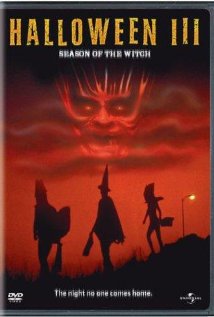 Let’s turn our head to sequels, 'cause let's face it baby, these days, you gotta have a sequel. A 2004 paper by Martin Harris examines the horror franchise. He draws on the concepts of postmodernism and the unsettling feeling of normal vs. not-normal. Why do the killers – Freddy, Michael, Jason – keep coming back? He argues that their resurrection in sequels engenders its own frightening uncertainty. Where is the threshold? When is dead really gone? Harris spends a good deal of time arguing that it is more the economic realities of Hollywood that drive the sequel-making process rather than a demand from moviegoers to revisit the killers. I can see a lot of truth in that as these are known properties that have relatively small budgets. But sequels also come with expectations. The author points out the case of Halloween III: Season of the Witch. You probably go into this movie expecting to see Michael Myers. Not so. Instead you end up with a weird children’s costume related plot. But, I guess these days we are much more likely to see a remake than a Halloween 12. Or even a prequel.
Whew. Have we covered everything? I think so. I tried to keep things general, talking mostly about major concepts that I hope got you thinking. If you like a particular topic then I encourage you to find the paper as they are all pretty good reads. And let me know your thoughts in the comments.
The references are, in order of their appearance:
 Wee, Valerie (2005). The Scream Trilogy, "Hyperpostmodernism," and the Late-Nineties Teen Slasher Film Journal of Film and Video, 57 (3), 44-61
Rathgeb, Douglas L. (1991). Bogeyman from the ID: Nightmare and Reality in Halloween and A Nightmare on Elm Street Journal of Popular Film and Television, 19 (1), 36-43 DOI: 10.1080/01956051.1991.9944106
Connelly, K. (2007). Defeating the Male Monster in Halloween and Halloween H2O Journal of Popular Film and Television, 35 (1), 12-21 DOI: 10.3200/JPFT.35.1.12-21
Cowan, G., & O'Brien, M. (1990). Gender and survival vs. death in slasher films: A content analysis Sex Roles, 23 (3-4), 187-196 DOI: 10.1007/BF00289865
Richard Nowell (2011). "There's More Than One Way to Lose Your Heart": The American Film Industry, Early Teen Slasher Films, and Female Youth Cinema Journal, 51 (1), 115-140 DOI: 10.1353/cj.2011.0073
Ryan Lizardi (2010). “Re-Imagining” Hegemony and Misogyny in the Contemporary Slasher Remake Journal of Popular Film and Television, 38 (3), 113-121 DOI: 10.1080/01956051003623464
Harris, M., & Bennett, K. (2004). You Can't Kill the Boogeyman: Halloween III and the Modern Horror Franchise Journal of Popular Film and Television, 32 (3), 98-120 DOI: 10.3200/JPFT.32.3.98-120
History of Horror Films:
Horror Film History
Filmmaker IQ’s “A Brief History of Horror”
AMC filmsite’s “Horror Films”
The Cinephile Fix’s “The Roots and History of the Horror Film”
No Film School’s “From Nosferatu to Jigsaw: a Look at the History of Horror Films”
Oh, and it's worth a visit to the Final Girl blog too!
(image via Scream Wiki)
Thursday, October 23, 2014
Trick-or-Treating: What Do You Hand Out On Halloween?

Halloween is almost here. And you know what that means: Candy! It’s one of those Halloween traditions that I just never seem to have grown out of. Those little chocolate bars are seriously dangerous to my waistline. Remember how much Halloween candy you ate when you were a kid? Were you one of those kids who gorged on all that sugary goodness, or were you the type to parse it out and make it last? I was a Trader, that kid that made deals to trade all her bad candy for the good stuff. Anyway, the topic of Halloween candy got me to searching through the scholarly journals in search of an article for today’s post. I came across a paper that asks if children really need all of that candy on Halloween. My first instinct was “Of course they do! It’s Halloween!” But, well, read on…
It seems that being a fat American isn't just limited to adults, childhood obesity has been on the rise over the last 3 to 4 decades. Access to unhealthy foods and the poor nutritional quality of their diets is much to blame for this. The promotion and glorification of high sugar, high fat foods on Halloween is simply a good example. It probably comes as no surprise that research has shown that when children are given free access to tasty food that they eat it, especially if it’s sweet, even when they are not hungry. But is there a good alternative that kids will like? A slightly older paper published in Journal of Nutrition Education and Behavior investigated the option and value of nonfood treats as substitutes for candy on Halloween.
To do this, the researchers gave 284 trick-or-treating children a choice of a toy or candy. The toys included stretch pumpkin men, large glow-in-the-dark insects, Halloween theme stickers, and Halloween theme pencils. The candy choices were recognizable name brand lollipops, fruit-flavored chewy candies, fruit-flavored crunchy wafers, and “sweet and tart” hard candies. All of these toy and candy options ranged between 5 and 10 cents per item. When a trick-or-treating child arrived at a door, they were asked for their age, gender and a description of their Halloween costume (pretty typical…except maybe the gender question). Then they were presented with 2 identical plates: 1 with 4 different types of toys and the other with 4 different types of candy, alternating by site/household which on side the plates were located. Only children between 3 and 14 were included. And, if the child asked for both toy and candy, they were allowed to take both but were excluded from the study, but only 1 little girl did that.
The results of the study showed that children chose toys as often as they chose candy. This suggests that children may forego candy more readily than adults expect. The authors cite Social Cognitive Theory as providing a way for candy alternatives to become more commonplace. According to this Theory, when parents see that children are accepting the candy alternatives they are more likely to continue the new toy giving behavior. Factor in the other fun Halloween activities – dressing up, walking around the neighborhood at night, etc. – and these toy treats become positively associated with the fun and the holiday.
Okay, so what about the Halloween-only-comes-once-a-year argument. I’ll admit it is a good one and it something that the authors spend time to address. They point out that Halloween isn’t the only holiday where food and candy are advertised. Well, isn’t that the truth. They even make a nice list of other food laden holidays and events: weddings, new babies, graduation, back-to-school, birthdays, Christmas, Hanukkah, Valentine’s Day, Easter, St. Patrick’s Day, Cinco de Mayo, Earth Day (wait…you get food on Earth Day?), Mother’s Day, Father’s Day, and Independence Day. What they don’t add in are all of the other food-filled events that come seasonally (picnics, cook-outs, etc.) and socially (happy hours, get-togethers, etc.). Put together, that’s a lot of bad food choices all year long.
Ultimately, what the authors are getting at is promoting healthy choices throughout the year. Part of this is giving children healthier options and traditions. It is almost more of a change for adults than it is for children. Breaking those food habits and associations isn’t easy, y’all. Food isn’t love, no matter how many Hershey’s Kisses you give someone. Wow did that ever sound shrinky!
But I’ll throw in a last little note that I think almost every child on the planet would agree with: Don’t be that house than hands out toothbrushes.
Schwartz, M., Chen, E., & Brownell, K. (2003). Trick, Treat, or Toy: Children Are Just as Likely to Choose Toys as Candy on Halloween Journal of Nutrition Education and Behavior, 35 (4), 207-209 DOI: 10.1016/S1499-4046(06)60335-7
(image and product via epicurious)
Wednesday, October 31, 2012
Sciency Jack-o-Lanterns
Happy Halloween!
Here are some sciency pumpkins for your enjoyment. Now I'm going to look for some will power to not eat every piece of candy in sight.
(via The Segan Series, Cells in Culture, Science Stuff on FB, forevergeek, and shinyshiny.tv)
Here are some sciency pumpkins for your enjoyment. Now I'm going to look for some will power to not eat every piece of candy in sight.
 |
| Carl Segan pumpkin |
 | |
| Owl |
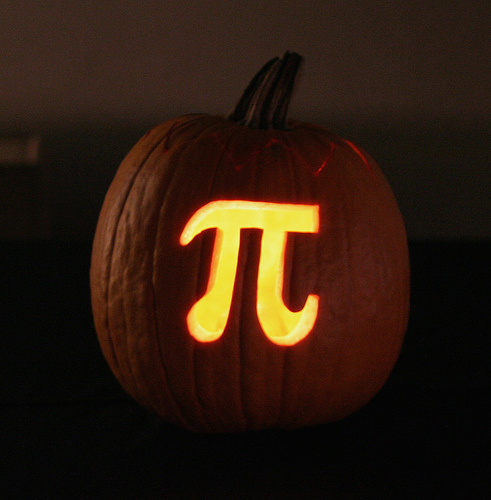 |
| Pumpkin Pi |
 |
| Skeleton hand pumpkin |
 |
| Leaves and Science pumpkin |
 |
| Space Shuttle pumpkin |
 |
| Equation pumpkin |
 |
| Anatomical Heart pumpkin |
 |
| Mitosis pumpkin |
(via The Segan Series, Cells in Culture, Science Stuff on FB, forevergeek, and shinyshiny.tv)
Sunday, October 31, 2010
Dress to Impress

Have you gotten your Halloween costume all picked out? What are you going to be this year?
I was interested in journal articles about Halloween practices and so did a quick literature search. Mostly I came up with articles about whether and how we should inspect and X-ray the candy kids get when they go trick-or-treating. Instead of choosing that necessary but creepy topic, I picked a study on the partying habits of college students on Halloween.
If you've been to college, lived around a college, or just know anything about college students then you know that many students use...how shall I put it?...mind altering substances. In 1988, 90% of 18 to 25 year olds had tried alcohol, 65% were considered current alcohol users, 56% had tried marijuana, and 15% were considered current marijuana users. This same age group also reported having tried or used other drugs such as cocaine (20%), stimulants (11%), and sedatives (5%). This study was published in 1993 and so, admittedly, its stats from 1988 were newer then and probably have changed some since then, and vary considerably. But, because we are discussing this paper specifically, let's go with it.
Halloween is a major party opportunity for students. It is also an opportunity to dress in costume. This study took a look at the behavior of college students and the role that Halloween costumes play in whether students masquerade with a group and if these factors relate to alcohol and drug use. Why should wearing a costume make such a difference? Well, it has to do both with the relationship between dress behavior and self as well as the disguise of identity.
The study looked at a total of 1,253 students from two colleges in upstate New York and included both sexes across all age ranges and class years. A questionnaire called "Halloween Activities" was administered to the students to gauge their Halloween partying practices. The questionnaire revealed dressing in costume to be associated with alcohol use, in fact, 85% of those who partied on Halloween used alcohol. There was no relationship between wearing a costume and drug use, though. They asked students if they used costumes to hide or disguise their identity and related that to alcohol use, and they found no significant association. On the topic of "masquerading with a group" they found an association between drugs and groups, but of those who used these substances a greater number did not masquerade with a group.
The study advises educators to "emphasize that dressing in costume can be a positive social experience - one that allows for creative expression of the self - and that alcohol and other drugs are not necessary to enhance this experience," that students could dress "for both fun and fantasy when wearing a costume."
Here's the paper:
Miller, Kimberly A., Cynthia R. Jasper, and Donald R. Hill (1993) Dressing in costume and the use of alcohol, marijuana, and other drugs by college students. Adolescence: Spring 1993; 28(109), 189-198. (PMID: 8456608)
It's Alive!

"Written in 1818, the book was influenced by a scientific feud that ushered in the first battery and our modern understanding of electricity.You can see the actual story I quoted here:
The story begins in the mid-18th century. Electricity had captured the imaginations of many of Europe's top scientists, and at that time very little was understood about the nature of electricity. Scientists could generate static electricity using spinning machines, but it was not until Benjamin Franklin's famous kite experiment in 1752 that they proved that lightning was of the same essence.
At the Univ. of Bologna in Italy, noted surgeon Luigi Galvani was investigating the effects of electricity on animals. It was not an unusual line of inquiry. Researchers knew electrical shocks produced violent spasms and speculated that electricity might cause muscular contractions.
On January 26, 1781, while dissecting a frog near a static electricity machine, Galvani's assistant touched a scalpel to a nerve in its leg, and the frog's leg jumped. Galvani repeated this and several other experiments, observing the same violent muscle spasms. He also noticed that frog legs occasionally twitched when they were hung from a brass hook and allowed to touch an iron trellis, so Galvani joined a length of each metal together to form a brass and iron arc that made the leg muscles contract when touched.
But where did the electricity come from?
Galvani, who called it 'animal electricity,' believed it resided in the frog itself. He thought that the bimetallic arc merely conducted the electricity from one part of the frog to the nerve, causing the leg to jump. He published his findings in 1791 and, as the story goes, came to be known as the frog dancing master.
One of Galvin's earliest readers was Italian physicist Alessandro Volta. Volta already had earned an imposing reputation as the discoverer of electrical capacitance, potential, and charge, and also discovered and was the first to isolate methane gas. He replicated Galvani's experiments and helped popularize his work.
Yet Volta reached very different conclusions. He believed the electricity came from the two metals used in the arc, and that the frog was acting as the conductor. Within the year, he replaced the frog's leg with brine-soaked paper, detected a current, and challenged Galvani.
The scientific world divided into two camps, animal electricity versus dissimilar metals. The feud became bitter. At one point, Volta wrote to a friend that his opponents wanted him dead. 'I'll be damned if I'll oblige them,' he added.
In 1799, Volta invented the voltaic pile, a stack of discs of two different metals separated by brine soaked paper. The galvanic or voltaic cell was the world's first battery, and the progenitor of automotive lead-acid batteries.
Today, we know that Volta's stack worked because dissimilar metals transferred electrons in an oxidation-reduction reaction, and the frog legs moved because electricity plays a role in muscular contractions. Of course it would take many decades to work out the details to reach this level of understanding.
So how did this influence a young Mary Shelly and lead her to compose one of the most widely read novels of all time, 'Frankenstein; or, The Modern Prometheus'?
Galvani's nephew, Giovanni Aldini, was a fierce partisan of animal electricity, yet he did not ignore Volta's pile. Aldini used it to tour the capitals of Europe and demonstrate the medical benefits of electricity -- or not. His demonstrations involved jolting corpses with electricity and making decapitated criminals sit upright.
Aldini's most famous exhibition took place in 1803 at the Newgate Prison in London, U.K. He inserted metal rods into the mouth and ear of the recently executed corpse of murderer George Foster. 'The Newgate Calendar,' a book about the criminals of Newgate Prison, described what happened next: 'On the first application of the process to the face, the jaws of the deceased criminal began to quiver, and the adjoining muscles were horribly contorted, and one eye was actually opened. In the subsequent part of the process the right hand was raised and clenched, and the legs and thighs were set in motion.'
Not surprisingly, some observers thought Aldini was bringing Foster back to life.
Mary Shelley knew all about Galvani, Volta and Aldini. Humphry Davy and William Nicholson -- the era's leading electrical researchers -- were friends of her father. In 1816, at age 19, she spent the summer in Geneva, Switzerland with Lord Byron and her future husband, Percy Shelley. The season was cold and rainy, and they spent many evenings around the fire, reading German ghost stories and discussing electricity's potential to reanimate corpses.
It must have seemed like she was merely peering into the near future to imagine that one day, a Victor Frankenstein might succeed in reanimating an assembly of body parts."
http://www.laboratoryequipment.com/News-the-science-behind-frankenstein-102910.aspx
Because of Halloween and the popularity of Frankenstein, this story has been making its way around the Internet. And, granted, has been appearing verbatim on many credible news sources and websites. But I usually try to verify a story before posting it, if I can. This one, however, was a bit more difficult to track down. I did find some interesting information posted by Sherry Ginn of Wingate University on a University of Florida website. The information there seems to support the above story, as do some other sources, and so I'm pretty confident that it is authentic. You can read that entry and more about Mary Shelley's life here :
http://www.clas.ufl.edu/ipsa/2003/ginn.html
And here is some additional info about Mary Shelley and the writting of her book:
http://www.independent.co.uk/arts-entertainment/books/reviews/the-original-frankenstein-by-mary-shelley-with-percy-shelley-ed-charles-e-robinson-1017483.html
Subscribe to:
Posts (Atom)
