Showing posts with label physiology. Show all posts

Thursday, October 8, 2015

Who Are You Wearing?: Does Competition Affect How Women View Luxury?


What do you think of when I say “luxury consumption”? Probably something that requires a Robin Leach voice over, right? Now what if I ask you why these luxuries are so valued? Is it because they are of excellent quality? Aesthetically appealing? Highly exclusive? Next, consider the audience for the luxury – who is admiring who? And what does that luxury symbolize? Status? Wealth? Success?

A recent paper in Evolutionary Psychology takes a look at these questions and has one of the best titles ever. To date, much of the research on luxury consumption has focused on why men spend so much money on brands that “offer no additional utilitarian benefits compared to their cheaper counterparts.” I found that rather odd as I tend to think of women when I think of luxury shopping. Perhaps because I am one. For example, did you know that an Hermès Birkin bag can go for over $200,000? Yes, that is an extreme example, but think about how many women you see every day that carry Coach bags, wear designer brand clothes, and/or own at least one pair of Jimmy Choo shoes. Put that way, perhaps it is unsurprising to know that women spend huge sums of money on “conspicuous luxuries,” an average of $100 billion each year. This study looked at the psychology of women in relation to symbolism of these luxuries by breaking it down into two experiments.

Experiment 1 – Does competition trigger women’s luxury consumption and preferences?

A group of 195 women, under the age of 50 and of various incomes and education levels, completed an online survey. A 2 (context) by 2 (luxuries) by 2 (product type) factorial design used to test fictional scenarios.

In the context of competition:

Competitive Scenario: Women were asked to rate four pictures of attractive women. Then they were asked to read a scenario with those pictures in mind. For example:

Imagine that you are at a class reunion and you meet an attractive, smart, funny, intelligent man with an engaging personality. However, the woman in the picture also shows an interest in this man and she has struck up a conversation with him while you were gone to get a drink.

Noncompetitive Scenario: Women were asked to rate four pictures of landscapes for attractiveness. Then they read a scenario such as:

Imagine that you are walking through the most beautiful landscape and you enjoy the environment, weather and views.

The luxuries and types:

Women were asked to read a description of a luxury product that enhances physical attractiveness (like a dress) or a neutral product that does not (like a smartphone). Then the luxuriousness of the product was manipulated by using various adjectives. For example:

“Imagine you see a little black dress in a store. It is a very expensive but beautiful dress. The dress is a unique piece of an exclusive clothing line. It has an excellent quality and is only available in a luxurious clothing store. When wearing this dress you will feel luxurious.”

When asked to read the scenario, they were asked to imagine the items in a fashion store and rate how much they liked the item.


They found that women in the competitive context felt more competitive, and women in the luxury condition found products to be more luxurious. Okay, yeah, I would pretty much expect that. But more specifically, they found interaction: women who perceived the luxury smartphone as more luxurious and expensive in the competitive context. It was context that ended up playing the dominant role in female-female competition, particularly with luxury items that enhance physical attractiveness (like the dress). I definitely believe that one.


Experiment 2 – What do luxury goods signal to rival females?

An online survey was also used for this experiment. A 9 (product) by 2 (product type) between-subjects design was used. First, women read a scenario where a woman leaves for a trip and upon arrival realizes she forgot a product. So she goes on a shopping trip and purchases Product X for Price Y. In the luxury condition a dress or watch would be purchased for 300 Euro (did I mention this was conducted in Belgium?). In the non-luxury condition, an alarm clock or night cream would be purchased for 15 Euro. Next, respondents were asked to assess the woman on various traits (attractive, sexy, loyal, smart, mature, ambitious, wealthy, etc.) and mate value (agreeableness, sexual willingness, ambition, status, etc.). They were also asked if they would consider this woman to be a friend, if she spent a lot of money on that product, and if they would spend similar amounts of money.

The respondents in the luxury condition agreed that the woman spent a lot of money on the product, and that they would spend less money on it. This luxury-loving woman was also perceived to be more attractive, sexier, flirtier, youthful, ambitious, and richer but less loyal, mature, and smart. She was also less likely to be a potential friend. However, there no differences between the mate value perceptions and the degree to which the woman was considered to be a rival. There were also some interaction terms here. For example, the woman was perceived to be more youthful in the luxury condition when she purchased the attractiveness enhancing product.

So what do we take away from all of this? Perhaps we just like the self-promotion. Or maybe we just feel more attractive wearing a luxury dress. Yeah, sure, maybe. But these results really show that we like to look luxurious to up our attractiveness to beat another woman. Frankly, ladies, we sound like judgmental bitches.


ResearchBlogging.orgHudders, L., De Backer, C., Fisher, M., & Vyncke, P. (2014). The Rival Wears Prada: Luxury Consumption as a Female Competition Strategy Evolutionary Psychology, 12 (3) DOI: 10.1177/147470491401200306

Friday, August 28, 2015

Swarming Squid Sperm: A Strategy in Sneakiness


Sneaky swarming squid sperm. Yeah, let’s talk about that. ‘Cause you hear that and you gotta know, right? But before all the sperm and the swarming is the amorous squid. Let’s start there.

As you may expect, squid have both a male and a female. Male squid produce spermatophores, packets of sperm that they can transfer to the females. Female squid carry around these sperm packets until they are ready to spawn. That can be quite some time in some species. When they are ready, they will use the stored sperm to fertilize and then release hundreds or thousands of eggs into the water as jelly-like strands. That’s about what we know about squid reproduction, the rest is relatively mysterious.

A newish study in Current Biology sheds some light on the mysterious nature of squid sperm. The study organism is Loligo bleekeri, one of the more common of the pencil squids (Loliginidae) in Japan and southern Korea. It is moderately large (40 cm) with very short arms. It is a polyandrous species, meaning that males only mate with one female, but females mate with many males. It is a good mating system for researchers interested in mate choice and sperm competition (oh yeah, there’s a whole subdiscipline of the science of sperm competition – rethinking your job now aren’t you?). These have been shown to drive sperm evolution (yes, that’s a thing) and morphology to optimize fertilization success. Because in this game, it’s all about how many babies you have.

One of the things that makes this squid species particularly interesting is the dimorphism among males. Large “consort” males do all the work. They compete with other males, court females with colorful body displays, and guard the female until she spawns his offspring. Smaller “sneaker” males are just that: sneaky. They rush in under the nose (or beak, as it were) of the consort male, attach their spermatophore and book it on outta there. The dimorphism in males is reflected in their mating as well as their size. Consort males place their spermatophores inside the female’s oviduct, while the sneaker males just stick it onto the external body surface near to the seminal receptacle near the mouth. It isn’t as close to the eggs, but it must be a successful otherwise why do it? What is it that makes this stick-and-ditch strategy so successful?

To find out, the researchers dissected consort and sneaker males to recover their spermatophores. Then sperm were released into test tubes, diluted and tagged with fluorescent labels (each type with a different label). They observed that when the sperm suspension was drawn into a capillary tube the sneaker, but not the consort, sperm aggregated (or “swarmed”) to form a regularly striped pattern along the tube. And, when sneaker and consort sperm were mixed, still only the sneaker sperm swarmed. The sperm weren’t slowing down or sticking together, so what was causing the swarming? It’s not like the sperm are problem solving. So the next thought was: Maybe it’s a chemical response. So a filter assay was designed where two chambers were separated by a filter so fine that only small molecules could get though. A sperm suspension was put into the lower chamber and then each type of sperm added to the top to see where it swam. Again, only sneaker sperm migrated toward the filter. Okay, so it must be some kind of chemical attractant, but what and how?

Again, labeled sperm suspensions were put into capillary tubes. Then bubbles of different gases were microinjected into the solution. This assay revealed that carbon dioxide (CO2) attracted sneaker, but not consort, sperm. This CO2 is likely generated by the sperm via the carbonate system. Not exactly a super-simple system. To tease apart the mechanism, they developed caged carbonate (you’re thinking Han Solo…me too, but not quite the same) to sculpture gradients of bicarbonate (a basic solution, pH-wise). This system allowed them to determine that swarming depends on acidic (CO2 and/or H+) gradients but not on a biocarbonate gradient. Next, they found that carbonic anhydrases (CAs) are involved in swarming as CO2 sensors in cells.

But let’s go back to the acid thing (as both CO2 and H+ increase acidity). The researchers used a pH-sensitive dye to look at the acid gradient during swarming. They observed that the middle of the swarm acidified first, producing a H+ gradient outwards. When they added a buffer, the swarming disappeared. When they put a pipette of acid (H+) into the suspension, both sneaker and consort sperm moved toward it. But remember that only CO2 attracted the sneaker sperm. Additionally, the pH at which these types of sperm responded was different. They found that only sneaker sperm lowered their intracellular pH with environmental pH. This means that only sneaker sperm have a H+ transport system that allows for the CO2 attraction. And finally, they showed that calcium (Ca2+) influx controls cause the sperm to turn around when they reach the end (weak part) of the gradient.

Whew! That’s a lot of compact information! So let’s put it together in a whole-organism, what-the-heck-is-going-on kind of way. Why does it matter that sneaker sperm like CO2? Remember back to the placement of the spermatophores by each of the males. When the female releases her eggs, the consort male’s sperm has first access because it is in the oviduct. They fertilize a lot of eggs but not all. Then the female holds her eggs in her arms while she swims to a good substrate to release them. Squid arms and mouth are not all that far away from each other. This is when the sneaker male sperm goes to work. The swarming allows the sperm to stay close to the site of egg deposition and may be sensing CO2 released from the eggs; both increase the chances of fertilization. And, in the end, that’s what it’s all about.


ResearchBlogging.orgHirohashi, N., Alvarez, L., Shiba, K., Fujiwara, E., Iwata, Y., Mohri, T., Inaba, K., Chiba, K., Ochi, H., Supuran, C., Kotzur, N., Kakiuchi, Y., Kaupp, U., & Baba, S. (2013). Sperm from Sneaker Male Squids Exhibit Chemotactic Swarming to CO2 Current Biology, 23 (9), 775-781 DOI: 10.1016/j.cub.2013.03.040


And for a little more info, here's an earlier study on the same topic:


ResearchBlogging.orgIwata, Y., Shaw, P., Fujiwara, E., Shiba, K., Kakiuchi, Y., & Hirohashi, N. (2011). Why small males have big sperm: dimorphic squid sperm linked to alternative mating behaviours BMC Evolutionary Biology, 11 (1) DOI: 10.1186/1471-2148-11-236


(image via MarineBio.org -- Note that this species is Loligo vulgaris, the European squid. It is weirdly difficult to find images of L. bleekeri, but this image gives you some of the characteristics of the genus.)

Tuesday, July 15, 2014

Breaking Up is Hard to Do: Photosynthesis, Water-Splitting, and the OEC

A very very cool paper was recently published online. The paper details a study that shows the first images of water splitting apart during photosynthesis. So pick you jaw up off the table and we’ll get into the nitty-gritty details.

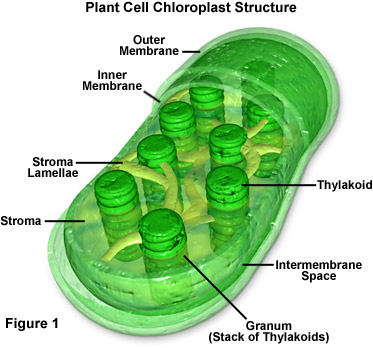
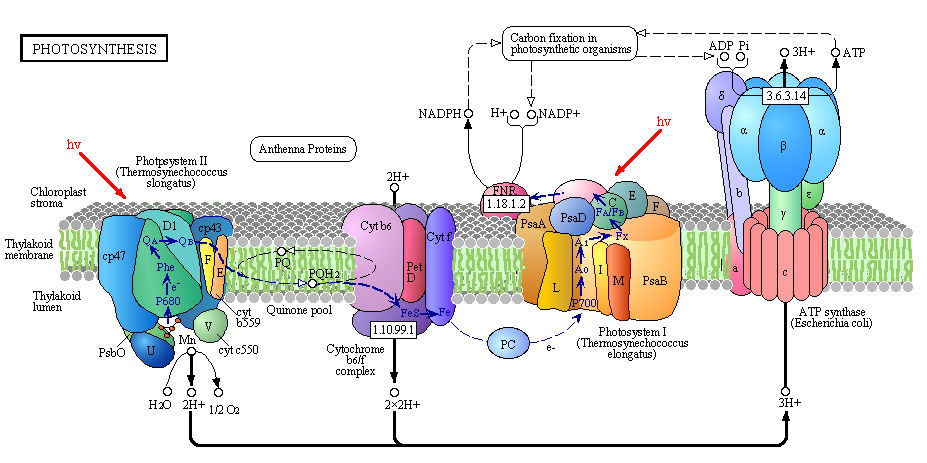
ChloroplastLet’s start by accessing your long-term memory, dragging out some of that basic biology information you buried after high school and grabbing on to that dusty file about photosynthesis. If you remember, plants have little green, bean-shaped energy factories in their cells called chloroplasts. These chloroplasts are filled thylakoids stacked up in grana. The thylakoid membranes contain networks of pigments, including chlorophyll, arranged in aggregates or complexes. Think of them kinda like light energy harvesters. Energy is captured for functional and structural units of protein complexes called Photosystem I (PSI) and Photosystem II (PSII). PSI is the light reaction and converts light energy to chemical energy. The pigments of the complexes each absorb light and then pass along that light energy to the central chlorophyll molecule to do photosynthesis. The energy obtained in this reaction is stored in ATP (adenosine triphosphate) and NADPH (nicotinamide adenine dinucleotide phosphate-oxidase) molecules. PSII, the dark reaction, takes place in the stroma within the chloroplast. This reaction uses the Calvin cycle to convert carbon dioxide and energy from ATP into glucose (sugar). To say that is photosynthesis put shortly and simply would be an understatement, but keep this basic reaction in mind:


6 CO2 + 6 H2à C6H12O6 + 6 O2


It is important to mention that in PSII, water is photochemically oxidized to dioxygen (O2) by the oxygen-evolving complex (OEC), a metalloenzyme cluster containing manganese and calcium. The OEC cycles through five photo-catalytic stages (S0-S4) in which four electrons are sequentially extracted from the OEC in four light-driven charge-separation events by a repeatedly photo-oxidized chlorophyll center (Kok cycle). This is the reaction that makes all that oxygen we breathe.

2 H2à S0-S4 à O2 + 4 H+ + 4 e-

Photo by: Mary Zhu @ ASU

The new paper by Kupitz et al. (and al. and al. and al.) published in Nature looks closer (very close!) at this PSII water-splitting reaction. They had some issues to overcome if they wanted to collect more information on this reaction, mostly involving the static nature of X-ray crystallography and the damage done to the OEC with this method. Traditional X-ray crystallography enables 1.9Å resolution (near atomic) but the OEC probably suffers X-ray damage. To overcome this, the researchers used serial femtosecond crystallography. This method uses single shot diffraction patterns are collected from a stream of nanocrystals, using 120 Hz femtosecond (one millionth of a nanosecond!!) pulses from an X-ray Free Electron Laser (XFEL). The second is the quality of the structural information. These pulses are so intense that the sample/specimen is destroyed, but the pulse duration is so short that the diffraction is observed before the destruction occurs. The method produces millions of “snapshots” in hours and can collect time-resolved data for dynamic processes like water oxidation in PSII.

The researchers developed a multiple-laser illumination scheme to observe this dynamic reaction in thermophilic cyanobacterium (Thermosynechococcus elongates). They progressively excited the OEC in dark-adapted PSII nano/microcrystals by two laser pulses from the dark S1 state via the S2 state to the double-flash putative S3 state (5 and 5.5Å resolution). Believe it or not, that was their method put simply. Essentially, they were able to determine the structures of the states and to produce maps of the protein subunits and cofactors of PSII, including the electron transport chain. They found that PSII undergoes significant conformational changes electron acceptor side and at the Mn4CaO5 core of the OEC. The metal cluster significantly elongates, making room and allowing for binding of the incoming water molecules. Then voilà! Water splitting!

So I know what you may be thinking: Why all of that lead-up to a simple protein shape change conclusion? Well, it’s all about mechanism, figuring out the process of photosynthesis at its most basic level. If you think about it, photosynthesis is the biological reaction. It is fundamental to life on Earth as we know it. It converted the oxygen-poor atmosphere of early Earth to the oxygen-rich atmosphere we (and all other respiring organisms) depend on, and continues to supply us with life-giving oxygen. That oxygen comes from this water splitting reaction, and the OEC is one of those structures where you usually have to but "possible model of..." in front. This type of study gives incredible resolution of this structure as well as a new methodology to gain further knowledge. With a more technological viewpoint, work like this could eventually lead to the development of an artificial leaf and synthetic photosynthesis. And, let’s face it, that is really really cool.


ResearchBlogging.orgKupitz, C., Basu, S., Grotjohann, I., Fromme, R., Zatsepin, N., Rendek, K., Hunter, M., Shoeman, R., White, T., Wang, D., James, D., Yang, J., Cobb, D., Reeder, B., Sierra, R., Liu, H., Barty, A., Aquila, A., Deponte, D., Kirian, R., Bari, S., Bergkamp, J., Beyerlein, K., Bogan, M., Caleman, C., Chao, T., Conrad, C., Davis, K., Fleckenstein, H., Galli, L., Hau-Riege, S., Kassemeyer, S., Laksmono, H., Liang, M., Lomb, L., Marchesini, S., Martin, A., Messerschmidt, M., Milathianaki, D., Nass, K., Ros, A., Roy-Chowdhury, S., Schmidt, K., Seibert, M., Steinbrener, J., Stellato, F., Yan, L., Yoon, C., Moore, T., Moore, A., Pushkar, Y., Williams, G., Boutet, S., Doak, R., Weierstall, U., Frank, M., Chapman, H., Spence, J., & Fromme, P. (2014). Serial time-resolved crystallography of photosystem II using a femtosecond X-ray laser Nature DOI: 10.1038/nature13453

Arizona State University Science and Tech press release: "ASU-led study yields first snapshots of water splitting in photosynthesis"
Science Daily article: “First snapshots of water splitting in photosynthesis”

For more on the plant physiology:
ASU's page "What is Photosynthesis?"
James Johnson @ FSU page on "The Manganese-calcium oxide cluster of Photosystem II"
Dr. Jakubowski at Saint Johns University "Chapter 8 - Oxidation/Phosphorylation"

(images via FSU Molecular ExpressionsJakubowski's website, and Arizona State University, respectively)

Thursday, December 26, 2013

What's Vitamin D, Precious?


The latest installment of The Hobbit trilogy has come to theaters. In honor of Bilbo's return to the screen I thought I would do a post about some Middle Earth science.

A new article by Joseph and Nicholas Hopkinson, published in The Medical Journal of Australia, asks an interesting question: Why do bad guys always lose? The villain might score some small victories in the beginning, the good guys will stumble along the way, but ultimately the hero will achieve victory in the end. It is a strikingly consistent feature of narratives whether they are on the page, stage, or screen. Most agree that this trope can be attributed to conventions about morality and the necessity of the happy ending. However, the authors of this paper posit that there may be other major factors that lead to the defeat of evildoers: their aversion to sunlight and their poor diet. These factors lead may lead to a vitamin D deficiency that reduces martial prowess.

Vitamin D is referred to as the “sunshine vitamin.” It is a fat-soluble vitamin that acts as a steroid hormone. It is produced by the skin in response to ultraviolent light (sunlight). It also occurs naturally in a few foods such as egg yolks, fish oils, and cheese. Vitamin D is essential for strong bones because of its role in calcium metabolism, and it has immune-modulating functions. Vitamin D deficiency (VDD) can result in rickets, osteomalacia, skeletal muscle weakness, and a susceptibility to other conditions ranging from multiple sclerosis to tuberculosis and accelerated lung function decline.

The authors first conducted a literature search on “imaginary populations” and “vitamin D” that returned no publications, letting them know that they were on to a novel concept. Then they performed a pilot study using textual analysis to extract data relating to diurnal habits, dwelling, light exposure and diet from The Hobbit by J. R. R. Tolkien. Next, they identified protagonists as good or evil and victorious or defeated on binary scales by consensus. These characters were then scored on (1) sun exposure rated from 3=lots to 0=none, (2) the mention of a vitamin D-containing diet item with 0=no mention and 1=mention, and (3) summing these to give a vitamin D score that was related to victoriousness by unpaired t tests.

Let’s break it down by type:

The Good Guys -

As a hobbit, Bilbo Baggins lives in the ground. However, his hobbit hole has lots of windows and he often smokes his pipe in the sun overlooking his garden. He has a varied diet that includes cake, tea, seed cake, ale, porter, red wine, raspberry jam, mince pies, cheese, pork pie, salad, cold chicken, pickles and apple tarts. And this is simply what he offers the dwarves that invade his household at the beginning of the story. The dwarves are described as a race that likes the dark, but they do spend a lot of time above ground in at least the first part of their journey to the Lonely Mountain. And, as their dinner at Bilbo’s house shows, they eat a variety of food with gusto! As wizards may frequently travel, they will also receive quite a bit of sunlight. And although their diet is not specifically described, Galdalf is often seen appreciating the food and beverage that goes along with any social endeavor he may observe or participate in. Elves, both high and wood, “feast merrily in clearings in the woods” and also receive high vitamin D scores.

The Bad Guys -

One of the first unsavory creatures that the good guys come across are trolls. Trolls naturally avoid sunlight as it turns them into stone. They live on an exclusively mutton diet, are strong but stupid, and consume jugs of “good drink” that further befuddle their wits. In one of the best scenes (in my humble opinion), Bilbo meets Gollum. Gollum lives in the deep dark of the Misty Mountains. His diet consists of a lot of raw blind fish which may be good, but as all fish do not contain vitamin D it remains unclear as to the advantages of this item. He also eats goblins, on the rare times that they fall into his domain. And, although goblins may also eat some fish (especially the Great Goblin), their proclivity for the dark also gives them a low vitamin D score. Spiders (e.g. Shelob) dwell in the dark and ambush their prey, the vitamin D content depending on what wanders into their territory. And finally, Smaug the dragon lives under his stolen mountain coming out at night to eat people (favoring maidens, but sometimes also ponies and Lake-men).

The authors' initial textual analysis supported their hypothesis that the success of the good guys may be assisted, to some extent, by the poor diet and lack of sunlight experienced, and even preferred, by the bad guys. Their scoring results show the mean vitamin D score of the victorious characters to be significantly higher than the non-victorious. However, they note that “the absolute concordance between goodness and victoriousness precludes an assessment of this as an independent effect.”

It is important to note that a few things were not taken into account for the purposes of this study. The first are the health issues surrounding smoking which is associated with skeletal muscle dysfunction. Another is the taxanomical classification of creatures (i.e. mammal vs. bird vs. arachnid). In humans, vitamin D is produced by a UVB-induced conversion of 7-dehydrocholesterol into vitamin D. The vitamin then undergoes two hydroxylations in the body for activation. As the physiology of the creatures of Middle Earth is more obscure, it is not known if they produce vitamin D in a similar way. As this is a pilot study, the authors also only look at The Hobbit and so do not include any details on diet and habitat that are further detailed in the other works of Middle Earth. Perhaps future investigations will include these novels and even some other well known bad guys from some of our other favorite tales. I look forward to it!


ResearchBlogging.orgJoseph A Hopkinson, & Nicholas S Hopkinson (2013). The hobbit — an unexpected deficiency The Medical Journal of Australia, 199, 805-806 DOI: 10.5694/mja13.10218

More about vitamin D and VDD:


ResearchBlogging.orgRathish Nair, & Arun Maseeh (2012). Vitamin D: The “sunshine” vitamin J Pharmacol Pharmacother, 3 (2), 118-126 DOI: 10.4103/0976-500X.95506


(image via the LOTR Wiki) 
Related Posts with Thumbnails