Showing posts with label Valentine's Day. Show all posts

Tuesday, February 14, 2017

Like a Tardigrade, My Love For You Will Never Die

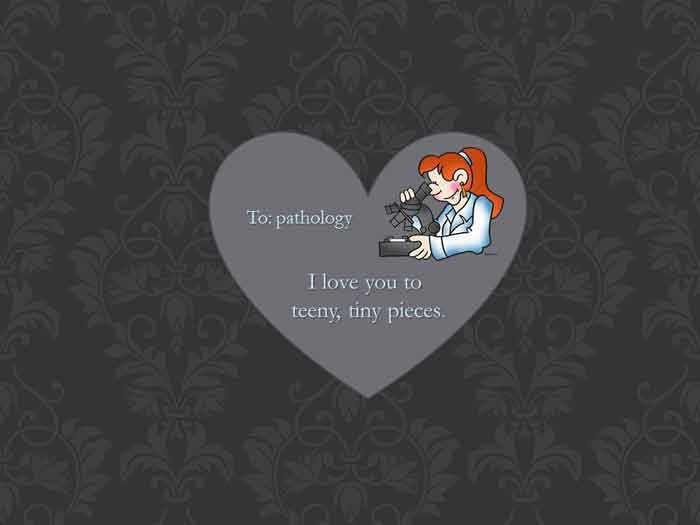
How could I pass up a Valentine's Day without posting some wonderfully sciency V-day cards and comics?

From: Tiny Snek Comics

via FB; credit unknown

From: Sketching Science


From: National Geographic Channel


From: Trust me, I'm a "Biologist"; comic credit: Nick Uhlig


From: Trust me, I'm a "Biologist"; comic credit unknown


From: Entomology Memes

From: Fake Science


From: The Upturned Microscope


From: Gomer Blog


From: Science Friday


From: Science Friday


From: xkcd


Saturday, February 13, 2016

Where Are My Chocolates?: The Role of Gift Giving on Valentine's Day


I think that the day after Valentine’s Day is actually the best. After all, chocolate is 50 percent off. However, using the holiday as an excuse to delve into the myriad of studies that attempt to explain the complexity of human attraction and relationships is pretty fun. Last year I examined moves, specifically some fly dance moves and rather cheesy pick-up lines. Today, I think I’ll explore gift giving.

In the field of animal behavior, gift giving (or nuptial gifts) is practically its own subdiscipline, particularly in insects. These gifts are typically food items (but sometimes are inedible tokens) presented from the male to the female during courtship. They may be to show the female that he is worth her time, show how healthy the he is, how good a provider he can be, or simply to keep her distracted from eating him during the actual mating (except in those cases of specialized body parts or “suicidal food transfers”…now that is the ultimate sacrifice for your bae!). The gift giving behavior, especially if it involves an extreme sacrifice on the part of the male, can only arise if the giver has some net fitness benefit. He must be able to increase his paternity share (particularly in polyandrous mating systems) and/or boost the female’s fecundity, thereby increasing the number of offspring.

Humans are not insects. Obviously. But gift giving, and many of its underlying behavioral mechanisms, is still very important to our mating system. I’ve already mentioned chocolate that, while offering little nutritive value, sure does make us ladies happy. As you know, these are not the only gifts given on Valentine’s Day. An interesting paper by Rugimbana et al., published in the Journal of Consumer Behavior in 2003, examines the role of gift giving on Valentine’s Day. The authors point out right up front that if you think about this “holiday,” you might notice that it is rather small in scale compared to the high rollers (i.e., Christmas). However, it is unique in that it has become almost ritualistic in its symbolic gift giving. So much so that it has become over-commercialized and now causes increased anxiety and pressure to those who involve themselves in it. The study looks at the role of social power exchanges as the basis for gift giving on Valentine’s Day, specifically in young men. To assess this, they interviewed male participants aged 18-25, asking about their attitudes towards Valentine’s Day, perceptions of female expectations and various types of gifts, and the appropriateness of various types of gifts to the length of a relationship.

This study found that for young men “the overwhelming motive for [giving] gifts on Valentine’s Day was obligation.” The men thought that gift giving was necessary when in a relationship simply because their significant other was expecting it. How romantic. This obligatory gift giving was thought essential early on in a relationship, especially if they wanted to avoid a conflict. The phrases “all hell would break loose” and “I hope…I’d still have a girlfriend” were used. However, only 25 percent of men replied that they expected something in return for the Valentine’s Day present. That sounds a bit harsh. But not so fast. When the researchers broke things down by their altruistic value, or lack of, some interesting patterns emerged. For example, when men were asked “if you were to buy lingerie for your partner, would it be for you, or for her?,” 90 percent said that it would be for themselves. Shocker on that one, I know. That isn’t to say that altruistic answers weren’t given (e.g., “you don’t need a day to say I love you”), just that it is difficult to separate from self-interest (e.g., “if you do it right, you’ll be glad”).

The authors were able to boil Valentine’s Day gift giving down to three motives: 1) obligation, 2) self-interest, and 3) altruism. Importantly, these motives existed in combination and a “social power exchange” was present. In other words, giving rewards the giver. All of this sounds rather callous and almost Machiavellian. Ladies, we sound rather demanding…I mean, “all hell will break loose” over one day and one gift? Wow. And guys, while turning an obligation into a reward is rather cunning and evolutionarily arguable, it is also sort of cliché at this point. Perhaps both sexes should consider the gift giving rules of other holidays like Christmas. Just a thought.


ResearchBlogging.orgRugimbana, R., Donahay, B., Neal, C., & Polonsky, M. (2003). The role of social power relations in gift giving on Valentine's Day Journal of Consumer Behaviour, 3 (1), 63-73 DOI: 10.1002/cb.122


(image via Valentines Day Pictures)

Thursday, February 12, 2015

Will You Be My Valentine?: Making All the Right Moves


My Valentine’s Day themed posts have been both popular and fun to write. In last year’s Getting a Date for Valentine’s Day series, you learned that you should wear something red, gaze without being creepy, tell a good joke before walking up to your potential date who is preferably standing next to some flowers, and then open with a unique request to segue into asking them out. But that isn't the end of the story. Oh no, there are many more things that you can do to attract that special someone, all scientifically examined of course. Today we’ll take a look at two more of them.

Bust-A-Move


It’s serendipity that our V-day themed discussion about sexual selection starts on Darwin’s birthday (Happy Birthday Chuck!). Did you know that Charles Darwin was actually the first to suggest that dance plays a role in evolution? It is a sexually selected courtship signal that reveals the genetic or phenotypic quality of the dancer, usually the male. Basically, the quality of the movement signals things like physical strength and fluctuating asymmetry (FA). The latter is a term you see a lot in these types of studies and it describes how much an organism deviates from bilateral symmetry. Essentially, if you develop all lopsided then it will show in your movement. Take what you know of testosterone, or other steroids. Increase that and you see improved physical strength and athletic ability. Now translate that, and its developmental implications, to dance.

It has been suggested that human women have developed ways to assess these visual cues in men in order to select high quality mates. However, quantifying these decisions in a study has proven difficult as women use the appearance of the dancer as well as their quality moves. A 2009 study by Hugill et al. in the journal Personality and Individual Differences looked at whether male physical strength is signaled by dancing performance. They included 40 dancers, recorded their age, body weight and height and then gave them a series of handgrip tests to quantify their physical strength. Then they dressed the men all in white overalls (I know, sexy right?), put them in a blank grey room, and asked them all to dance alone to the same song while they were being video recorded. Let’s assume, for the sake of this argument, that this scenario doesn’t induce awkwardness in these men. Then each video was converted to grey-scale and a blurring filter applied to cover information about body shape. Once this prep work was done, the researchers recruited 50 female to rate each video. The results showed that the women perceived the dances of physically stronger men as more attractive.

The rise of motion-capture technology has added a very useful tool to this type of study. Rather than going through all of those post-conversion video steps, complex movements like dance can be captured by the computer sensors to be applied to homogeneous human figures. A 2005 study by Brown et al. in Nature did just this to look at the variation in dance quality with genetic and/or phenotypic quality. They motion-captured 183 dancers and selected 40 dance animations based on the composite measures/level of fluctuating asymmetry of the dancer (hmm…I wonder if they could get Andy Serkis to help out). Then they showed these dance animations of symmetrical and asymmetrical individuals to 155 people (themselves characterized for FA) to rate. In both males and females, the results showed that symmetrical individuals were better dancers, with males better than females, but sex didn’t matter within the asymmetrical group. For the raters, generally males liked to watch female dancers rather than male (you’re shocked, I can tell), and females liked symmetrical males. Data also showed that female raters, more than male raters, preferred the dances of symmetrical men, and that symmetrical men prefer symmetrical female dancers more than do less-symmetrical men. If you have ever interacted in any social context ever then you know that beautiful, good dancers liking beautiful, good dancing partners isn’t exactly groundbreaking. But what does this study mean for the hopelessly asymmetrical? Shift your preferences downward to a less symmetrical potential date.

Now the question becomes about the dance itself. Which body movements are the attractive ones? A 2010 study by Neave et al. published in Biology Letters looked at specific movement components within dance to see which one(s) influenced perceived dance quality. Using motion-capture, the created digitally dancing avatars of 19 men for 37 women to rate for dance quality. To quantify specific movements, angles, amplitudes and durations of joint, angular and unidirectional movements were measured. Good dancers were those that had larger and more variable movements with faster bending and twisting movements in their right knee. Weirdly specific, right? Especially that right knee thing. But, considering that most people are right-handed, this might be expected.

So what have we learned? Well, we now know that how you move tells someone a lot about you, regardless of how attractive you are. Maybe a good dance class is in order?

ResearchBlogging.orgHugill, N., Fink, B., Neave, N., & Seydel, H. (2009). Men’s physical strength is associated with women’s perceptions of their dancing ability Personality and Individual Differences, 47 (5), 527-530 DOI: 10.1016/j.paid.2009.04.009

ResearchBlogging.orgBrown, W., Cronk, L., Grochow, K., Jacobson, A., Liu, C., Popović, Z., & Trivers, R. (2005). Dance reveals symmetry especially in young men Nature, 438 (7071), 1148-1150 DOI: 10.1038/nature04344

ResearchBlogging.orgNeave, N., McCarty, K., Freynik, J., Caplan, N., Honekopp, J., & Fink, B. (2010). Male dance moves that catch a woman's eye Biology Letters, 7 (2), 221-224 DOI: 10.1098/rsbl.2010.0619

Hey baby, you must be gibberelin, because I'm experiencing some stem elongation.


You've got your eye on someone fabulous. You walk over; lean against the bar and…


What you say next can make or break that first meeting. What do you say? There are several studies out there that look for practical answers to this question. Considering our current dating discussion, we’ll hone in on pickup lines (or chat-up lines), which run the gamut from cute to cringe-worthy. In general, these types of studies ask “What makes a pickup line good?”


To get at this, many categorize them according to a 1986 study by Kleinke et al.:
  1. Cute-flippant – convey interest with humor that is usually flirtatious or sexual 
    • “You must be tired, because you’ve been running through my mind all day,” (A line that has actually been used on me. Sigh.) 
    •  “Do you have any raisins? No? Well then, how about a date?” 
  2. Innocuous – convey interest without incurring the pain of from potential rejection by using simple questions to start conversations 
    • “Have you seen any good movies lately?” 
    • “What do you think of the band?” 
  3. Direct – convey interest with sincerity and flattery 
    • “I saw you across the room and knew I had to meet you. What’s your name?” 
    • “Can I buy you lunch?”
Evolutionarily speaking, women are making choices that optimize the viability of any offspring, but the male attributes they prefer are dependent on the type of relationship they are seeking. If they are looking for a long-term relationship then they prefer males who appear likely to be good fathers. Broadly, these women are picking up on signals for warmth-trustworthiness (honesty, reliability, kindness) and status-resources (intelligence, dominance, earning potential). If they are looking for a short-term relationship then signals of good genes like attractiveness and health are important. A 2010 study by Senko and Fyffe applied this evolutionary perspective to pickup lines, examining the perception of these signals. They asked 70 women to imagine that a man comes up to them and initiates contact using either a flippant, innocuous, or direct pickup line. Then the women rated that imaginary man on several attributes including trustworthiness, intelligence, sociability, sense of humor, and creativity. The women also reported their willingness to carry a conversation and long-term or short-term relationship potential. The original Kleinke study found that everyone agreed that cute-flippant lines were the worst; go with innocuous or direct lines. Both studies found this to be particularly true for women. Senko and Fyffe found long-term relationship seeking women much less receptive to a flippant pickup line even though the men were judged as more sociable, more confident, and funnier. Conversely, they were also deemed to be less trustworthy and less intelligent. Short-term relationship seeking women judged a man based on his attractiveness rather than his choice of opener. Nice when your findings line up with the theory isn’t it?

Okay, so now we have zeroed in on the categories that work best: innocuous and direct. But is there something about the lines themselves that make them successful? A 2006 study by Bale et al. aimed to construct a pencil and paper instrument to index the effectiveness of pickup lines and identify cues as to their effectiveness. To do this, they created 40 vignettes in which a man attempted to start a conversation with a woman including 20 “one-liners” chosen as signals of particular male traits. Then participants were asked to rate the man’s pickup on whether or not a woman would continue the conversation. As with the previous studies, pickup lines involving jokes, empty compliments and sexual references rated poorly. Lines that indicated those evolutionary desirable traits did best: generosity, cultured, and physical fitness.

A 2007 study by Cooper et al. built on the Bale et al. work, looking at the effect of personality on the response to pickup lines. This study proposed that these openers can have two functions: attraction and selection. These functions may allow men to increase their effectiveness by skewing the distribution of women they attract towards a particular personality type. The researchers used the short scale version of the Eysenck Personality Questionnaire Revised (EPQ-r) to measure the personality traits of the participants. They also asked the participants to complete a Dating Partner Preference test which asks them to rate 33 adjectives to show how they felt about the trait in a prospective dating partner. Generally, they found four groups of adjectives that were preferred: good mate, compliment, sex (preferred by males), and humor (preferred by females). Are you sensing a theme yet? They also combined their dataset with Bale et al. to establish the relationships among vignettes to explore the effect of the sex of the participant. Women rated humorous items more favorably and sexually loaded lines less favorably than did men. (Again, you’re shocked, I know.) However, it turned out that men underestimated some things; like when he revealed wealth or proffered help in a way that showed off his character and when he handed over control of the interaction to the woman. On the flip-side, he also overestimated how she responded to showing off his accomplishments, especially if it was laden with innuendo.

Lessons learned from this? Construct your pickup lines carefully. Sure, humor is important but in pickup line form it just makes you look like an idiot. Instead, ask her what she thinks, listen and respond intelligently, and talk about yourself without being a show-off. In short, be a normal person, not a weirdo.


ResearchBlogging.orgKleinke, C., Meeker, F., & Staneski, R. (1986). Preference for opening lines: Comparing ratings by men and women Sex Roles, 15 (11-12), 585-600 DOI: 10.1007/BF00288216

ResearchBlogging.orgBale, C., Morrison, R., & Caryl, P. (2006). Chat-up lines as male sexual displays Personality and Individual Differences, 40 (4), 655-664 DOI: 10.1016/j.paid.2005.07.016

ResearchBlogging.orgCooper, M., O’Donnell, D., Caryl, P., Morrison, R., & Bale, C. (2007). Chat-up lines as male displays: Effects of content, sex, and personality Personality and Individual Differences, 43 (5), 1075-1085 DOI: 10.1016/j.paid.2007.03.001


(images via How Stuff Works, BuzzFeed, and QuickMeme, respectively)

Wednesday, February 13, 2013

Getting a Date for Valentine's Day: A Scientific Approach (Part 2)


Welcome to Part 2 of Getting a Date for Valentine’s Day: A Scientific Approach. This will make sense if you haven’t read Part 1, but to enjoy the full impact of this V-Day themed explosion of scientific knowledge, I suggest you read both. If that cramps your style then here’s a summary: (1) Just Ask, (2) Get Your Foot in the Door, and (3) Gaze Without Being Creepy. Now, let’s move on…

4. Make Them Laugh

How often do you hear that what people really want is someone with a sense of humor? Yeah, pretty often. There is some evidence that humor is related to sexual attraction, that people with a good sense of humor are preferred as friends and partners. This is especially true when men exhibit a sense of humor or use humor in their social interactions with women. A study published in 2010, again, by Nicholas Guéguen, looks at the sense of humor at the initial stages of a relationship. Does a man’s sense of humor make him more desirable to a woman he approaches to ask out? This study included young women sitting alone in the sidewalk area of different bars. Guéguen had male confederates sit near a woman and, so she could overhear them, start a benign discussion about their summer jobs. After three minutes of this some of the men would switch to a “Humor Condition” where one man in the group would tell three funny jokes while the other men at his table praised his humor. While this script was playing out, the confederates would take note if the woman was laughing or not. After his other confederates left, the joke-teller (or non-joke-teller in the No Humor condition) would then approach the female and say, ““Hello. My name’s Antoine. I noticed you when I arrived here. I just want to say that I think you’re really pretty. I have an appointment now, but I was wondering if you might give me your phone number. I could phone you later, and we could have a drink together someplace to get to know each other.” He would then wait 10 seconds while smiling and gazing at the woman to see if she gave him her number. Afterwards, the woman was asked to participate by answering a questionnaire. Guéguen found humor to “positively affect a woman’s interest in a man who expresses a sense of humor.” Additionally, higher sociability and intelligence was associated with the humorous male. Attractiveness was found to be insignificant between the Humor and No Humor groups. If we are connecting the dots then perhaps if humor = intelligence, intelligence = high status and success, high status and success = attractive to women, then attractiveness to women = humor. It’s simple logic really.

ResearchBlogging.orgGuéguen, N. (2010). Men's sense of humor and women's responses to courtship solicitations: an experimental field study Psychological Reports, 107 (1), 145-156 DOI: 10.2466/pr0.107.1.145-156

5. Red is Sexy, Wear Something Red

I tend to think of red as an overly commercialized Valentine’s Day ploy. And it is. But, as it turns out, there may also be some actual, scientific validity to the color of love. In nature, red is often a warning color (a prey-on-me-and-die adaptation) but with humans (and some other species, like primates), red may serve as an aphrodisiac, carrying a sex and romance connotation. I’ve come across two studies, one about men the other about women, that help shed some light on this “romantic red” hypothesis. Let’s start with the men. A study published by Andrew Elliot and Daniela Niesta in 2008 investigates this red-sex link for men’s evaluation of women. Their experiment was relatively long, but to boil it down, they asked men to rate photos of women, examining whether or not the presence of red affects attractiveness. The results showed strong support for the “red effect.” Even a brief glimpse of red was shown to enhance men’s attraction to women. Red was found to enhance sexual attraction but not general positivity and characteristics (likeability, kindness, intelligence).

Now for the ladies. A study published in 2010, also by Elliot’s group, investigated how red influences how women view men. For women, red has been linked to love and passion, carrying the meaning of sex and romance. Okay, got it, red equals attractive, right? Well…women are complicated creatures, and study upon study has shown that women don’t just take something as simple as attractiveness into account when choosing a partner. They also look for such things as authority, wealth, and status. But research has shown that red is linked to strength, power, high status, and competitive dominance, appearing historically as symbols of these traits. Put together, this means that the color red should enhance women’s attraction to men by increasing their perception of the man’s status and therefore her attraction to him. That is exactly what Elliot et al.’s study tested. Again, I’ll boil down their long experiment: They asked female participants to respond to a photo of a man. These photos were manipulated for color in either the background or on the clothing of the man. The results showed that women who viewed men with red (background or clothing) perceived him to be more attractive and were more sexually attracted to him. Women who viewed a man wearing red also perceived him to have higher status and higher status potential, and women who viewed a man described as high in status perceived him to be more attractive. What did we learn from these studies? That red is a sexy color for both men and women, so try a little red in your wardrobe.

ResearchBlogging.orgElliot, A., Niesta Kayser, D., Greitemeyer, T., Lichtenfeld, S., Gramzow, R., Maier, M., & Liu, H. (2010). Red, rank, and romance in women viewing men. Journal of Experimental Psychology: General, 139 (3), 399-417 DOI: 10.1037/a0019689
 
ResearchBlogging.orgElliot, A., & Niesta, D. (2008). Romantic red: Red enhances men's attraction to women. Journal of Personality and Social Psychology, 95 (5), 1150-1164 DOI: 10.1037/0022-3514.95.5.1150

6. Say it With and Near Flowers

Show your love, give them dying flower genitalia. Setting aside the fact that a bouquet of flowers is just a bunch of reproductive organs, flowers are used to reflect our emotions and moods, usually in a positive way and especially with women. Given this, a study by (you guessed it!) Nicholas Guéguen in 2011 examines how women respond to men with flowers. He wanted to know if physical attractiveness, sexual attractiveness, and dating potential would be influenced by the presence of flowers. He found that the simple presence of flowers in a room was enough to have women show more interest towards a man, and women who were exposed to flowers were more likely to say yes when asked out. Guéguen published a follow-up study in 2012 where he had men approach and ask out women in a shopping mall. He found that women approached near a flower shop were more likely to accept a date than women approached near other types of stores. So, as it turns out, flower genitals really are your ticket to love, or at least a first date. Perhaps you shouldn’t mention the word “genitals” though.

ResearchBlogging.orgGuéguen, N. (2011). ‘‘Say it with flowers’’: The effect of flowers on mating attractiveness and behavior Social Influence, 6 (2), 105-112 : 10.1080/15534510.2011.561556
 
ResearchBlogging.orgGuéguen, N. (2012). “Say it … Near the Flower Shop”: Further Evidence of the Effect of Flowers on Mating The Journal of Social Psychology, 152 (5), 529-532 DOI: 10.1080/00224545.2012.683463

We have come to the end of our sciency guide to solicitation (the legal kind) success. What have we learned? You should stake out some flowers (I never said you had to buy them) in your red shirt, skirt, tie, or whatever. Then you should tell a good joke before walking up to your potential date and opening with a unique request, segueing into an offer of a date. Simple, right?

Obviously this isn’t the be-all and end-all to this discussion (or Nicholas Guéguen would be out of a job), and so if you have any other studies you love on this topic please share them in the comments below.

Happy Valentine’s Day!


(image via staggered)

Monday, February 11, 2013

Getting a Date for Valentine’s Day: A Scientific Approach (Part 1)


Quite frankly, most years I feel like kicking Valentine’s Day in the truffles. Do I recognize this as a single woman’s reaction to a mushy, lovey, couples' holiday? Sure, but the urge to kick remains. This year, however, I’ve decided to take a more lighthearted, less violent approach. Part of this approach is to recognize, and even revel in, the more ridiculous aspects of commercialism and human relationships. As such, I found a selection of papers that, when put together, loosely instruct on how to get a date for Valentine’s Day (or any day really). As I started writing I realized that it would be just mean to make this a single post. I’d have people unsubscribing and falling asleep (not necessarily in that order) before they got through the second paper. So I’ve divided this “guide” into two parts.

1. Just Ask 

To get a date you must first find someone who is willing to date you. A paper published in the Archives of Sexual Behavior in 2011 by Nicholas Guéguen takes a look at how gender plays a role in receptivity to sexual offers. Guéguen conducted his study in France, gathering male and female university students to act as confederates. These confederates were first rated on their attractiveness using a 9-point attractiveness scale. Then they were asked to approach potential partners of the opposite sex on the street and say “I find you very likeable and attractive.” After this, the confederate asked one of two randomly determined questions: “Will you come to my apartment to have a drink?” or “Would you go to bed with me?” This study found that “men were apparently more eager for sexual activity than women” and that they were more willing to go to an unfamiliar female’s apartment and bed than females were when asked the same questions. You are completely shocked, I can tell. Forty percent of females agreed to go to an unfamiliar male’s apartment, and only one agreed to the sexual offer. These were the same results found in a similar study in the United States, supporting the idea that these reactions aren’t just typical of Americans. The U.S. study, however, did not take attractiveness of the solicitor into account. Guéguen’s experiment found that the more attractive the solicitor the more likely they were to get a positive answer, and that solicitor attractiveness was more important for males than for females. Women were more likely to go for a drink with an attractive man, but that attractiveness had no impact on the sexual offer. The men were more likely to say yes in general and even more likely to say yes to an attractive woman. You’re shocked again I can see. The take home from part 1 of our Valentine’s Day Guide? Perhaps, it is that asking doesn’t hurt. They may say yes, especially if you’re hot.

ResearchBlogging.orgGuéguen, N. (2011). Effects of Solicitor Sex and Attractiveness on Receptivity to Sexual Offers: A Field Study Archives of Sexual Behavior, 40 (5), 915-919 DOI: 10.1007/s10508-011-9750-4
 
2. Get Your Foot in the Door 

We can’t argue that the first point/instruction was blunt. Very blunt. So then, let’s refine it a bit. Nicholas Guéguen’s group also published a paper in 2008 about the “foot-in-the-door technique.” In this study, once again conducted in France, male confederates first asked a woman one of two foot-in-the door questions: “Hello, I’m sorry to bother you but would you have a light for my cigarette?” (note: In France, the rate of female smokers is higher so this isn’t a weird question) or “Hello, I’m sorry to bother you but I am looking for the Place de Libération.” If she responded to his question he then said “Thank you very much. Are you busy now? If not, we could have a drink together, if you have some time.” Guéguen found the foot-in-the-door technique to be associated with a greater number of positive responses to the second, courtship-related question. I’ll also point out that the men did not ask the women to go back to a strange apartment and/or jump into bed with them. Probably also a plus. A new, similar study published in 2012 by Dariusz Dolinski, looked at that initial foot-in-the door request, asking if the type of foot to put in that door matters. Dolinski had male and female confederates assigned to three different conditions: no initial request, a typical initial request, or an unusual initial request. The results showed that the “uncommonness of the first, initial request may enhance the effectiveness of the foot-in-the-door technique.” The author suggests that an unusual request requires the respondent to think about why they are complying, looking at themselves and the solicitor more closely. If we put together the blunt, just-ask technique with this second technique then we can conclude that asking is better than not asking and that a unique (and I’ll add: not creepy) lead-in is beneficial in gaining a yes for a date.

ResearchBlogging.orgGueguen, N. (2008). Foot-in-the-door technique using a courtship request: a field experiment Psychological Reports, 103 (6) DOI: 10.2466/PR0.103.6.529-534
 
ResearchBlogging.orgDolinski, D. (2012). The Nature of the First Small Request as a Decisive Factor in the Effectiveness of the Foot-in-the-Door Technique Applied Psychology, 61 (3), 437-453 DOI: 10.1111/j.1464-0597.2011.00477.x
 
3. Gaze Without Being Creepy

Eyes are small but important features. You can tell a lot from someone’s eyes. They guide our attention to objects that are important, have aesthetic value, or both. Did you know that attention strongly varies as a function of how attractive a person is? It’s true. It has been shown that both men and women gaze longer at more attractive opposite-sex faces. Now, that seems relatively common sense, but if you look at gazing as a signal of mate quality then you have a whole new pick-up technique in your repertoire. But your gender and how long you gaze matters. You don’t want to be the creepy-starey-person or the weird-shifty-eyed-person. A study published in the Archives of Sexual Behavior by Ischa van Straaten et al. in 2009 investigates to what extent the length of people’s gazes during social interactions is affected by the attractiveness of the partner. They recruited University students, put them in a naturalistic bar-like environment, introduced confederates and participants, seated them face-to-face, and filmed them with hidden cameras. After a conversation, the participants were led to a different room, where they rated the confederate’s attractiveness and their own dating desire. The results of this study showed that “the expression of attraction through gazing in real-life interactions varies between men and women” with men gazing longer at attractive women than less attractive women and the length of women’s gazes to be unaffected by attractiveness. The authors suggest this is because “men engage in overt, proactive, mating strategies while women engage in more covert, cautions strategies.” Granted, this study just looks at gazing rather than making suggestions for dating. But if we use this knowledge to make conscious decisions about how we (literally) look at someone then the conclusion for this technique would be to look at someone (especially male to female) a little bit longer to show that you find them attractive. Practice with gaze length may be required so as not to squick her out.

ResearchBlogging.orgvan Straaten, I., Holland, R., Finkenauer, C., Hollenstein, T., & Engels, R. (2009). Gazing Behavior During Mixed-Sex Interactions: Sex and Attractiveness Effects Archives of Sexual Behavior, 39 (5), 1055-1062 DOI: 10.1007/s10508-009-9482-x

That's all for now. Look for a Part 2 on Wednesday!

(image from Arkadin blog)

Friday, February 8, 2013

I've Taken a Lichen to You

This year I've found quite a few sciency Valentine's Day e-cards. I figured I would start off a series a V-Day posts with a few created by a friend of mine, Jen Santoro, a forestry masters student and all-around awesome chica. She did a great job with these!


Related Posts with Thumbnails