You like beer. You like science. Now watch beer explain science.

Monday, June 24, 2013


Wednesday, June 12, 2013
How Does Superman Shave?
The new Man of Steel movie comes out this week. I don't know about you, but I'm pretty excited about it.
If you watch The Big Bang Theory then you have been introduced to a few of the reigning Superman arguments out there (see this and this). Now some explanations from famous sciency people about a burning question that I know you've always wondered about: How does Superman shave?
Gillette recently put this question to these nerd icons as a transparent but clever marketing strategy. You can even vote for your favorite over a Gillette's YouTube channel. First, let's see Gillette's quick marketing video. Then see the good stuff: Responses from Bill Nye, Mayim Bialik, Kevin Smith, and The Mythbusters.
Bill Nye’s theory:
Mayim Bialik's theory:
Kevin Smith’s theory:
The Mythbusters Adam and Jamie's theory:
Hmmm...I think I like Mayim Bialik's Enzymatic Follicle Denaturation Theory best. What about you?
(via Fashionably Geek via The Nerdist)
If you watch The Big Bang Theory then you have been introduced to a few of the reigning Superman arguments out there (see this and this). Now some explanations from famous sciency people about a burning question that I know you've always wondered about: How does Superman shave?
Gillette recently put this question to these nerd icons as a transparent but clever marketing strategy. You can even vote for your favorite over a Gillette's YouTube channel. First, let's see Gillette's quick marketing video. Then see the good stuff: Responses from Bill Nye, Mayim Bialik, Kevin Smith, and The Mythbusters.
Bill Nye’s theory:
Mayim Bialik's theory:
Kevin Smith’s theory:
The Mythbusters Adam and Jamie's theory:
Hmmm...I think I like Mayim Bialik's Enzymatic Follicle Denaturation Theory best. What about you?
(via Fashionably Geek via The Nerdist)
Monday, June 10, 2013

Friday, June 7, 2013
The Halting of the Hot Jupiter

We haven’t talked about exoplanets for a while, and we should ‘cause they are pretty badass. Through various podcasts and the like, I've been hearing some really cool things about NASA’s Kepler Mission and all of neat astronomical bodies it’s been finding. So I decided to browse around the NASA and JPL websites to see what new coolness has been discovered recently.
NASA’s Kepler Mission was launched in 2009. It was built to detect potentially life-supporting planets around other stars. This satellite has a 0.95-meter diameter telescope that continuously and simultaneously monitors the brightness of 100,000 stars brighter than 14th magnitude in the constellations Cygnus and Lyrae. Kepler uses the transit method of planet finding, looking for the drop in the brightness of a star as a planet crosses in front of it at repeated, regular intervals. This dip in brightness not only tells us of the existence of a planet but also its size and orbit, from which we can calculate temperature. So far, the discovered extrasolar planets (or exoplanets) have been giant, mostly the size of Jupiter and bigger. A “hot Jupiter” is one of these large planets that orbits very close to its star. We’re talking less than 1 astronomical unit (AU), with orbital times of only 1-3 days! As such, they are really really hot. A new paper published in The Astrophysical Journal takes a look at one of the biggest questions in exoplanet research: how did these really big planets get so close to their stars? Or, perhaps more importantly, since they are so close, why weren't they pulled into their stars?
It is currently accepted that hot Jupiters formed further out from their host stars, likely beyond the snow line (or frost line), and then migrated in to their current, closer orbits. By observing how an exoplanet moves and how its parent star rotates (the “Rossiter–McLaughlin effect” for you space nerds), we also know that some exoplanets are misaligned and others are not. The misaligned exoplanets are likely directed inward due to interactions with other bodies in the system (gravitational scattering, the “Kozai mechanism”). Essentially, big things that have lots of gravity affect other big things that have lots of graving and they all push each other around. Aligned planets probably ended up where they are through migration in their primordial disk. As the conditions (density, temperature, magnetic fields, etc.) within this disk and the forming planet’s mass and density change over time the planet moves its orbit. Type-I migration assumes the density structure of the disk is affected by turbulence rather than by planets, and as such, is applicable to small mass planets. With Type-II migration, a gap between the planet and disk forms as the result of tidal torques from the planet becoming stronger than the viscous torques of the disk, and as such, is applicable to larger mass planets. The Type-II migration model is good at telling us how gas giants form beyond the snow line and move inwards but not so good at telling us how this migration stops once it is started.
The new study looks at the large ensemble of close-in exoplanets covering a wide range of host star (or stellar) masses in order to discern which mechanism halts exoplanet migration. First, the researchers collected exoplanet data and subdivided by mass the confirmed exoplanets located less than 1 AU from their star. Then they further subdivided Kepler candidates by estimated planet radius into three groups that approximated the terrestrial, super Earth/Neptune, and Jovian planet masses. Next, they attached stellar masses to the system, constraining their study to masses between 0.1 and 1.5 mass of the Sun.
The researchers then took this exoplanet data and put it into several “migration halting mechanism models” to see which model best explained the observations. Their goal was to “generate a reasonably simple prediction for the density of exoplanets as a function of stellar mass and semi-major axis within 0.1 AU.” Now, I’m not a modeler. I’m not even going to pretend I know how to put one together or even really describe it to you without confusing myself and you. Suffice it to say that the authors ran a bunch of models and did a bunch of Bayesian evaluations (my brain rebels at all things Bayesian too).
The astronomers found their tidal circularization model to provide the best mechanism for halting planet migration. Planet-planet scattering, secular chaos, and the Kozai cycle are all mechanisms that migrate planets inward and invoke tidal (or gravitational) forces on it. These forces lower the semi-major axis (the longest radii of an elliptical orbit) and eccentricity until the orbit of the planet becomes more circular. Put simply, when the gas giant gets close to its star, tidal forces cause the exoplanet’s elliptical orbit to become more circular. This circularization stabilizes the planet’s orbit, halting the inward migration and preventing the planet from getting eaten by its star. This result does not rule out the Type-II migration model, but instead, it says that it isn't the role of the primordial disk (or getting to the edge of it) to halt the migration.
If you will remember, they also took a look at stellar mass. They wanted to see if the mass of the star had an effect on the planets’ distance from it. Their models showed that halting distance depends on the stellar mass. This result actually provides further support to the favored tidal forces model. The tidal forces model predicts that hot Jupiters of more massive stars should, on average, orbit further out. Their results also show a halting distance-stellar mass dependence that was stronger than predicted, suggesting that future theoretical work may be needed to reproduce the observed exoplanet distributions.
This begs the question of why did our own Jupiter not migrate inwards? Or if it did, why did it stop so far away? We should definitely be glad that it did (or didn’t?) or our puny little Earth would have been eaten up or thrown out. Thank you Jupiter for ending up where you are.
 Plavchan, P., & Bilinski, C. (2013). Stars Do Not Eat Their Young Migrating Planets: Empirical Constraints on Planet Migration Halting Mechanisms The Astrophysical Journal, 769 (2) DOI: 10.1088/0004-637X/769/2/86
Read JPL's story about this study: "Stars Don't Obliterate Their Planets (Very Often)"
Learn more about NASA's Kepler Mission: http://kepler.nasa.gov/
And I always find good stuff on the NASA and JPL websites!
(image via Cosmos, credit: ESA)
Monday, June 3, 2013
Blue and Yellow, Lab Edition
From the same group that brought you Bad Habits (in the Lab) and Some Budding Yeast I Used to Grow, here is a wonderfully sciency parody of Wiz Khalifa.
Thursday, May 30, 2013


Tuesday, May 28, 2013
Staying Sticky, a Frog's Journey
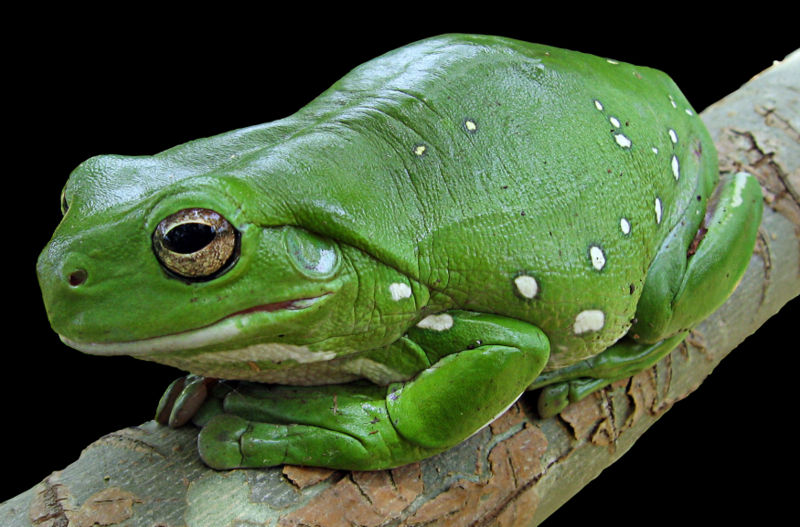
Climbing is good. It allows for gaining access to habitats that would otherwise be unavailable. And while this access is important (otherwise, why climb in the first place?), equally important is not falling to a gruesome death. This means that your method of adhesion to the surface you are climbing needs to be effective. For example, on rough surfaces, friction pads and claws work rather well. Smooth surfaces and overhangs offer a bit more of a challenge. If you want to climb one of these surfaces you have a couple of adhesion options – dry and wet. If you are a creature that chooses dry adhesion, like a gecko, then you have toe pads covered by large numbers of finely branching setae, each ending in a flattened spatula. When these spatula come into close contact with a surface van der Waals forces allow for the sticking. You remember van der Waals forces from physics class right? Those are the attractive forces that hold together molecules in solids. If you are a creature that chooses wet adhesion, like tree frogs, then you secrete mucus from glands ending on the surface of your toe pads. This mucus makes an adhesive bond by a combination of capillary and viscous forces.
Frog toes. They’re squishy, they’re sticky, they’re cute (feel free to say that in a sing-songy voice if you haven’t already). If you look very closely, you will also see that they have a hexagonally patterned surface. In between the pad epithelial cells there are mucus-filled channels that spread the mucus over the surface of the pad, creating a thin layer that allows for wet adhesion to a surface.
Enter a new problem: How do you keep your toe pads clean? Think about any sticky surface you know. Now think about putting that sticky surface on anther surface. What happens? It gets really dirty really quickly, causing it to be less sticky. So now you are a frog that needs sticky feet to climb, and to do that you need to keep your toe pads clean so that they remain sticky. You can’t really groom your toe pads when you are using them and molting/shedding isn’t frequent enough to shed the dirt (or “contamination”). The answer: a passive self-cleaning mechanism.
A study published in The Journal of Experimental Biology looks at this passive self-cleaning mechanism in frogs, using both single-toe experiments and whole-animal experiments. Their study animal was the Australian green tree frog (Litoria caerulea), also known as White’s tree frogs (and that dough-boy kind of cute if I must say *grin*). They used five frogs in each of their experiments, first washing them and carefully blotting them dry. (An aside, how do you get the job of tree frog washer?) For the purposes of a lab experiment, they had to create a contaminant. For this they used very small glass beads arranged in a single layer on a glass coverslip for the single toe experiment and as a thin layer in a Petri dish for the whole-animal experiment. For the single-toe experiments, the researchers used a custom-built force transducer consisting of the glass coverslip (the surface attachment) connected to a bending beam and then measured the forces in two dimensions – lateral drag and dab (simply pressed against the surface) – with and without beads. For the whole-frog experiments the animals were put on maneuverable platforms to see at what angles they began to slip and/or fall with and without beads. These experiments allowed them to calculate shear (friction) force and the normal (adhesive) force. Ever wonder when you are going to use trigonometry again? Well, if you know the body weight of the frog and the angle of the slip/fall you can calculate these forces. You're high school math teacher would be proud.
There were computer programs and statistics and equations (lots of equations) that I won’t go in to (as usual, you’re welcome). What they found is rather interesting. The whole-animal experiments showed that the toe pads of frogs will self-clean over time. With the first step, when the toe pad becomes contaminated, the adhesive and friction forces decrease, but then they recover such that by the fourth step 91.9 percent of the original adhesive forces and 98.5 percent of the original friction forces are back. These experiments also found that the more the toe pad is used the greater the recovery of the contaminated toes for both adhesion and friction forces. That is, a moving frog has cleaner toes than a stationary frog. The single-toe experiments shed more light onto why this is so. In the experiments that included the lateral drag movement, the frog toe recovered its adhesive force after about eight trials. Whereas in the dab experiments, there was little if any recovery (except if the pads were only partially contaminated). It seems that this shearing movement is an important feature of the self-cleaning mechanism, and it is one that is common in walking frogs. Frogs use this type of movement a lot on vertical surfaces and will continually re-position slipping pads to incorporate self-cleaning while maintaining adhesion to the surface. When the researchers looked even closer, at the level of pad contact area and the number of glass beads deposited on the glass during each trial, they found a correlation between adhesive force and contact area such that normal stress (adhesive force per unit area) remained constant. Since the number of beads deposited on the glass plate is a measure of self-cleaning, they were able to show a positive correlation between force recovery and contact area, particularly in the drag scenario. Essentially, as the toe pad drags along the beads get left behind, or "flushed," in the mucus footprint. Hmmm…mucus flushing doesn't make frog toes sound quite as cute.
Crawford, N., Endlein, T., & Barnes, W. (2012). Self-cleaning in tree frog toe pads; a mechanism for recovering from contamination without the need for grooming Journal of Experimental Biology, 215 (22), 3965-3972 DOI: 10.1242/jeb.073809...and if you have access there are some interesting if hard to see videos in the Supplemental Materials
(image via Wikimedia Commons)
Subscribe to:
Posts (Atom)
